
Dental Crowns in Greenville
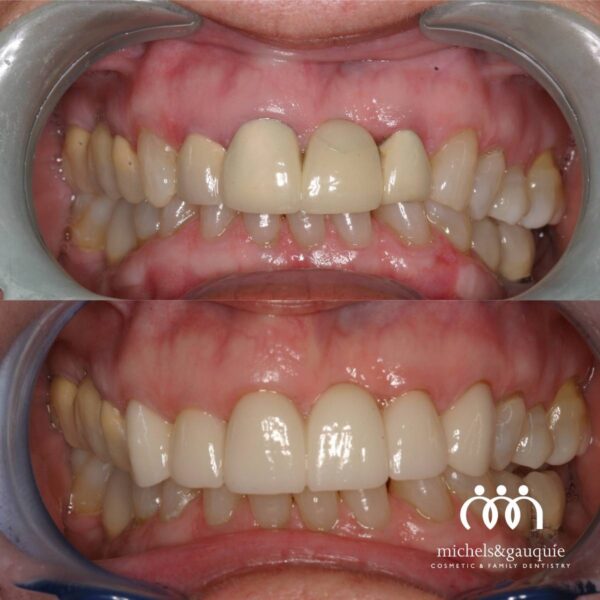 Dental Crowns in Greenville
A damaged tooth can affect more than your smile. It can make eating uncomfortable, increase sensitivity, affect confidence, and place your long-term oral health at risk.
Fortunately, dental crowns provide a reliable solution for restoring damaged, weakened, and worn teeth. At Michels & Gauquie Cosmetic & Family Dentistry, we provide custom dental crowns in Greenville to help patients protect their natural teeth, restore function, and maintain healthy smiles.
Whether you have a cracked tooth, a large cavity, a worn restoration, or recently completed root canal treatment, a dental crown may help restore strength and protect your tooth from further damage.
Our experienced dental team proudly serves patients throughout Greenville, Winterville, Ayden, Farmville, Pitt County, and Eastern North Carolina.
What Is a Dental Crown?
A dental crown is a custom-made restoration that completely covers the visible portion of a tooth above the gumline.
Often referred to as a “cap,” a crown is designed to restore the tooth’s:
- Shape
- Size
- Strength
- Appearance
- Function
Once placed, the crown surrounds and protects the remaining tooth structure. This added protection helps reduce the risk of additional damage while allowing patients to chew, speak, and smile comfortably.
Modern dental crowns are carefully crafted to blend naturally with surrounding teeth while providing long-lasting durability.
When Is a Dental Crown Needed?
Dental crowns serve both restorative and protective purposes. Dentists often recommend crowns when a tooth has become too damaged for a filling alone to provide adequate support.
Broken Teeth
A broken tooth can result from an accident, sports injury, fall, or simply biting into something hard.
When a tooth loses significant structure, a crown can restore strength and help prevent additional fractures.
Without treatment, a broken tooth may continue to weaken over time.
Cracked Teeth
Cracks can range from minor surface lines to significant fractures that threaten the integrity of a tooth.
A dental crown can help hold the tooth together and reduce stress on weakened areas.
In many cases, prompt treatment helps prevent the crack from worsening.
Large Cavities
When decay removes a substantial portion of the tooth, a traditional filling may no longer provide sufficient support.
A crown restores the tooth while protecting it from future damage.
After Root Canal Treatment
Root canal therapy removes infected tissue from inside the tooth. Although the procedure saves the natural tooth, it may leave the remaining structure more susceptible to fracture.
For this reason, dentists frequently recommend crowns after root canal treatment.
A crown protects the tooth and helps restore normal function.
Worn Teeth
Years of grinding, clenching, acid erosion, and normal wear can gradually reduce tooth structure.
Dental crowns can rebuild worn teeth and restore proper function and appearance.
Replacing Older Crowns
Even high-quality restorations may eventually need replacement.
A new crown can improve function, fit, and aesthetics while protecting the underlying tooth.
Benefits of Dental Crowns
Dental crowns remain one of the most versatile restorations in modern dentistry.
Protect Damaged Teeth
Crowns strengthen weakened teeth and help prevent future fractures.
Restore Chewing Function
Many patients experience improved comfort and function after treatment.
Preserve Natural Teeth
Whenever possible, preserving natural teeth remains the preferred approach.
Crowns often help patients avoid extraction.
Improve Appearance
Although this page focuses on restorative dentistry, crowns can also improve the appearance of damaged or worn teeth.
Long-Term Durability
With proper care, many crowns last 10 to 15 years or longer.
Types of Dental Crowns
Several materials can be used when creating dental crowns.
Porcelain Crowns
Porcelain crowns closely resemble natural tooth enamel and are often chosen when aesthetics are important.
Patients interested in cosmetic smile improvements can learn more on our Porcelain Crowns page.
Ceramic Crowns
Ceramic crowns provide excellent aesthetics while remaining metal-free.
Zirconia Crowns
Zirconia offers exceptional durability and strength, making it a popular option for many patients.
Porcelain-Fused-to-Metal Crowns
These restorations combine the strength of metal with the appearance of porcelain.
Metal Crowns
Although less common today, metal crowns remain extremely durable and may still be appropriate in certain situations.
The Dental Crown Process
Many patients are surprised by how straightforward crown treatment can be.
Consultation and Examination
The process begins with a comprehensive evaluation.
Your dentist will examine the affected tooth, review digital images if needed, and determine whether a crown is the most appropriate solution.
Tooth Preparation
A small amount of tooth structure is carefully reshaped to create space for the crown.
Digital Impressions
Precise impressions are taken to ensure a comfortable fit and natural appearance.
Temporary Crown
A temporary crown may be placed while the final restoration is fabricated.
Final Placement
Once the custom crown is ready, your dentist carefully checks the fit, bite, and appearance before permanently bonding it into place.
The result is a restoration designed to look natural and function comfortably.
How Long Do Dental Crowns Last?
One of the most common questions patients ask is, “How long will my dental crown last?”
The lifespan of a dental crown depends on several factors, including the material used, oral hygiene habits, bite forces, and regular dental care.
Many crowns last between 10 and 15 years, while some remain functional for 20 years or longer with proper maintenance.
Factors that may affect crown longevity include:
- Daily brushing and flossing
- Routine dental examinations
- Teeth grinding or clenching
- Crown material
- Overall oral health
- Diet and lifestyle habits
Although crowns are durable, they are not indestructible. Proper care helps maximize the lifespan of your restoration.
How to Care for a Dental Crown
Caring for a dental crown is similar to caring for your natural teeth.
Brush Twice Daily
Brush using a soft-bristled toothbrush and fluoride toothpaste.
Floss Every Day
Plaque and bacteria can still accumulate around the edges of a crown.
Daily flossing helps protect the surrounding tooth and gums.
Attend Regular Dental Visits
Routine examinations allow your dentist to monitor the condition of your crown and detect potential problems early.
Avoid Using Teeth as Tools
Opening packages or biting hard objects can damage both natural teeth and restorations.
Wear a Nightguard if Necessary
Patients who grind or clench their teeth may benefit from a custom nightguard to protect both crowns and natural teeth.
Dental Crowns vs Fillings
Both crowns and fillings restore damaged teeth, but they serve different purposes.
A filling repairs a portion of a tooth affected by decay or minor damage.
A crown covers the entire visible portion of the tooth.
A dentist may recommend a crown when:
- A cavity is too large for a filling
- A tooth is cracked
- A tooth has undergone root canal treatment
- Significant tooth structure has been lost
- An existing filling repeatedly fails
Crowns generally provide more protection when substantial damage exists.
Dental Crowns vs Tooth Extraction
Whenever possible, dentists prefer preserving natural teeth.
A dental crown often allows patients to keep a damaged tooth that might otherwise be at risk.
Benefits of saving a natural tooth include:
- Maintaining proper bite function
- Preserving surrounding teeth
- Protecting jawbone health
- Avoiding tooth replacement costs
- Maintaining natural appearance
Although extraction may occasionally be necessary, preserving a healthy tooth whenever possible often provides the best long-term outcome.
Can a Crown Save a Broken Tooth?
In many cases, yes.
A dental crown is often one of the most effective treatments for restoring a broken tooth.
After evaluating the extent of the damage, your dentist can determine whether enough healthy tooth structure remains to support a crown.
When treatment occurs promptly, a crown can often:
- Prevent additional damage
- Restore function
- Improve comfort
- Protect the remaining tooth structure
- Extend the life of the tooth
This is one reason we encourage patients not to delay treatment after a tooth becomes damaged.
Signs You May Need a Dental Crown
Many patients are unsure when a crown becomes necessary.
You should schedule an evaluation if you experience:
- A cracked tooth
- A broken tooth
- Significant tooth sensitivity
- Pain when chewing
- A large cavity
- A failing filling
- Visible tooth damage
- A loose crown
- A crown that has fallen off
Prompt treatment often allows for more conservative solutions and better outcomes.
How Much Do Dental Crowns Cost in Greenville, NC?
The cost of a dental crown varies from patient to patient.
Several factors influence treatment costs, including:
- Type of crown material
- Location of the tooth
- Complexity of treatment
- Need for additional procedures
- Insurance benefits
- Existing dental conditions
During your consultation, we will evaluate your needs and provide a personalized treatment plan.
Many patients find that investing in a crown helps avoid more extensive and expensive treatment in the future.
Why Choose Michels & Gauquie for Dental Crowns in Greenville?
At Michels & Gauquie Cosmetic & Family Dentistry, we believe every restoration should be functional, durable, and natural-looking.
Patients throughout Greenville and Eastern North Carolina trust our team because we provide:
Experienced Dentists
Our doctors have extensive experience restoring damaged and weakened teeth.
Personalized Treatment
Every patient receives a customized treatment plan designed around their unique needs.
Advanced Technology
Modern diagnostic and restorative technology helps us deliver predictable results.
Comprehensive Dental Care
If additional treatment is necessary, our team can provide a wide range of restorative and cosmetic services under one roof.
Patient-Focused Approach
We take time to answer questions, explain treatment options, and help patients feel comfortable throughout the process.
Frequently Asked Questions About Dental Crowns
Does getting a dental crown hurt?
Most patients experience minimal discomfort. Local anesthetic helps keep treatment comfortable.
Can a crown get a cavity?
The crown itself cannot develop decay, but the underlying tooth can still experience cavities near the crown margins.
Can a dental crown fall off?
Although uncommon, crowns can loosen or come off due to wear, decay, trauma, or cement failure.
How long does it take to get a crown?
Most crowns require two appointments, although treatment timelines vary.
Can I eat normally with a crown?
Yes. Once your final crown is placed, you can typically return to normal eating habits.
Are dental crowns covered by insurance?
Many dental insurance plans provide benefits for medically necessary crowns. Coverage varies by plan.
Can a crown replace a missing tooth?
No. Crowns restore existing teeth. Missing teeth may require bridges, dental implants, or other replacement options.
What happens if I delay treatment?
Delaying treatment can allow damage to worsen, potentially leading to infection, fractures, or tooth loss.
Can a crown improve appearance?
Yes. While crowns primarily restore function and strength, they can also improve the appearance of damaged teeth.
How do I know if I need a crown?
The best way to determine whether a crown is necessary is through a comprehensive dental examination.
Schedule a Dental Crown Consultation in Greenville, NC
If you have a damaged, cracked, broken, or weakened tooth, a dental crown may help restore strength, protect your oral health, and preserve your natural smile.
At Michels & Gauquie Cosmetic & Family Dentistry, we proudly provide custom dental crowns in Greenville, NC for patients throughout Pitt County and Eastern North Carolina.
Our experienced team can evaluate your needs, discuss treatment options, and create a personalized plan designed to restore your smile and protect your long-term oral health.
Contact our office today to schedule your consultation and learn whether a dental crown is right for you.


